24 Chicken Side Dishes Menu With Prices & Nutrition
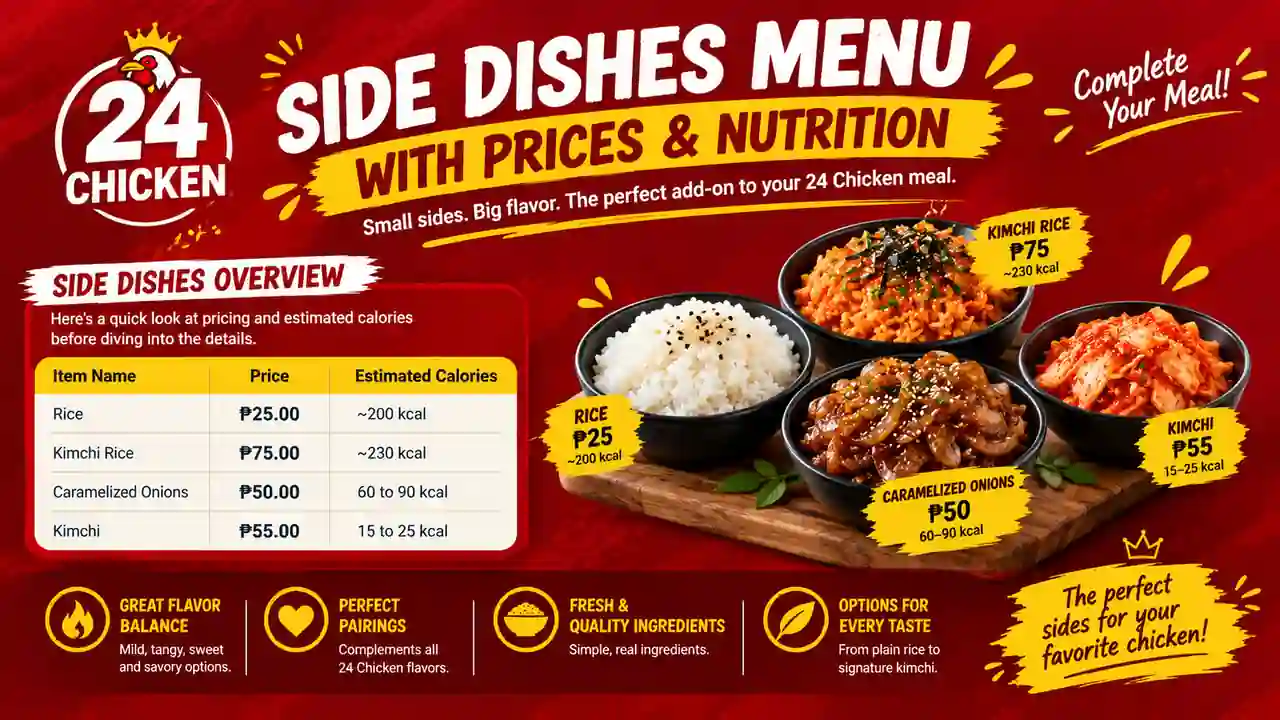
Side Dishes round out a chicken order, whether that means a simple rice add-on or a small serving of kimchi on the side. The section covers four items, and each one is built to play a specific role next to the chicken rather than just filling space on the tray. Some stay quiet and let the glaze take the spotlight, while others bring their own tang or sweetness to push back against a heavier flavor. Here’s what’s actually in each one, how it’s typically prepared, and which chicken flavor it pairs with best.
24 Chicken Side Dishes Menu Overview
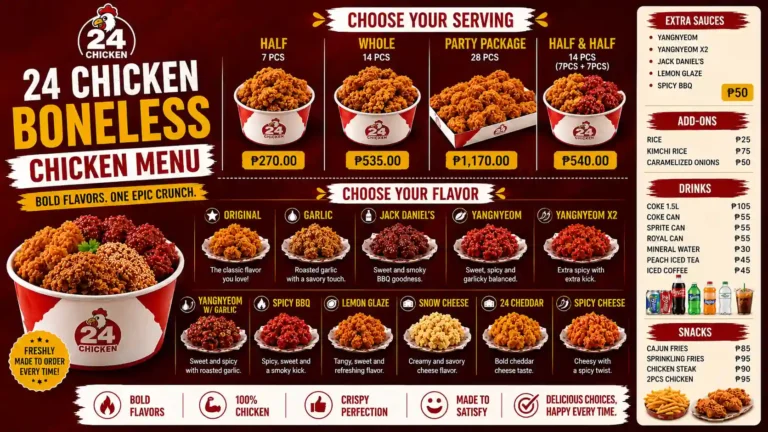
Here’s a quick look at pricing and estimated calories before getting into the details of each side.
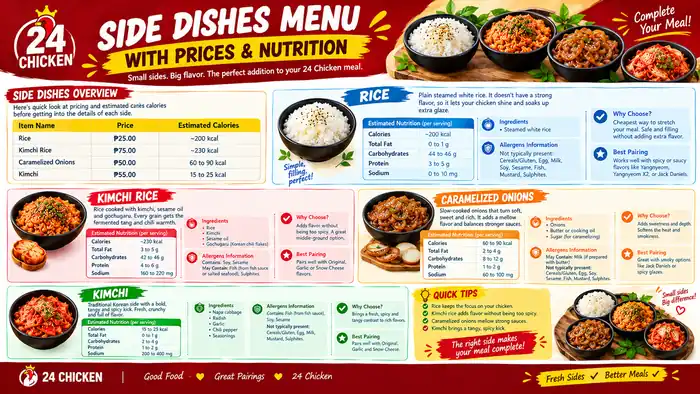
| Item Name | Price | Estimated Calories |
|---|---|---|
| Rice | ₱25.00 | ~200 kcal |
| Kimchi Rice | ₱75.00 | ~230 kcal |
| Caramelized Onions | ₱50.00 | 60 to 90 kcal |
| Kimchi | ₱55.00 | 15 to 25 kcal |
Rice
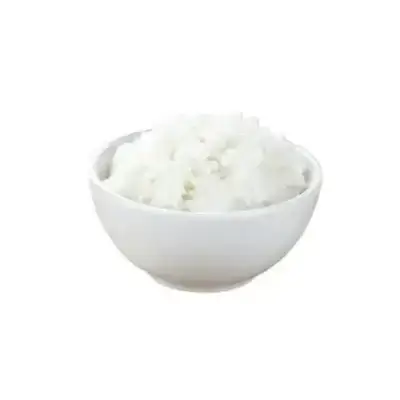
Rice here is plain steamed white rice, nothing dressed up about it. That’s actually the whole appeal. It carries almost no flavor of its own, which means it doesn’t get in the way when the chicken is already doing a lot of the work. A flavor like Yangnyeom X2 or Jack Daniels comes glazed with sugar, chili, and smoke, and pairing that with an equally bold side would just create noise. Rice lets the sauce stay the center of attention instead of competing with it, and it soaks up whatever extra glaze drips off the chicken along the way.
Estimated Nutrition Information
| Nutrient | Estimated Value |
|---|---|
| Calories | ~200 kcal |
| Total Fat | 0 to 1 g |
| Carbohydrates | 44 to 46 g |
| Protein | 3 to 5 g |
| Sodium | 0 to 10 mg |
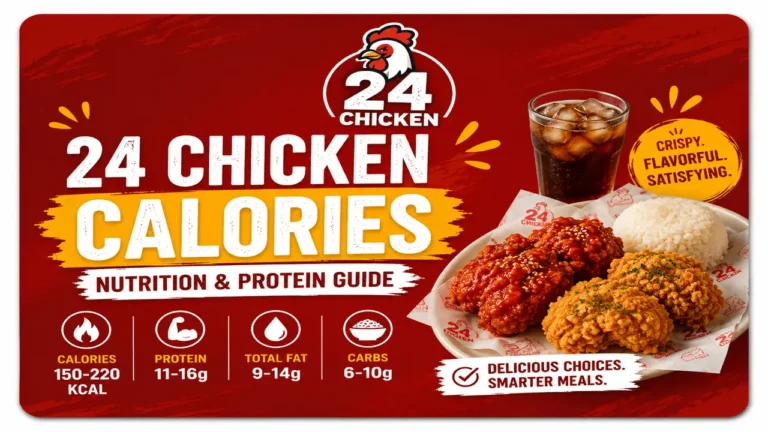
These are estimated values, and the total nutrition of a complete chicken meal can vary depending on the chicken flavor, portion size, and other items ordered. For a broader breakdown, see our 24 Chicken Calories & Nutrition Guide.
Ingredients
- Steamed white rice
Allergens Information
Not typically present: Cereals/Gluten, Egg, Milk, Soy, Sesame, Fish, Mustard, Sulphites
Why Choose Rice?
At ₱25.00, it’s the cheapest way to stretch a Half order into a full meal, and it’s the safest pick for anyone who just wants a filling side without adding a new flavor into the mix.
Best Pairing
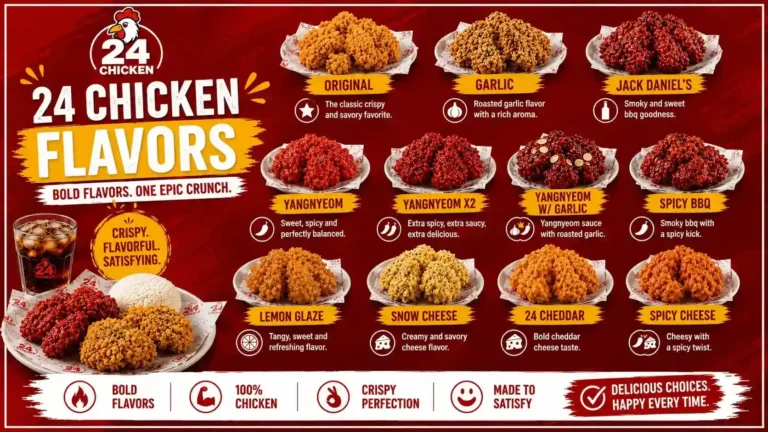
Rice works best with the sauce-heavy flavors on the menu, think Yangnyeom, Yangnyeom X2, or Jack Daniels, where a neutral base lets that glaze remain the main flavor on the plate instead of getting drowned out.
Kimchi Rice
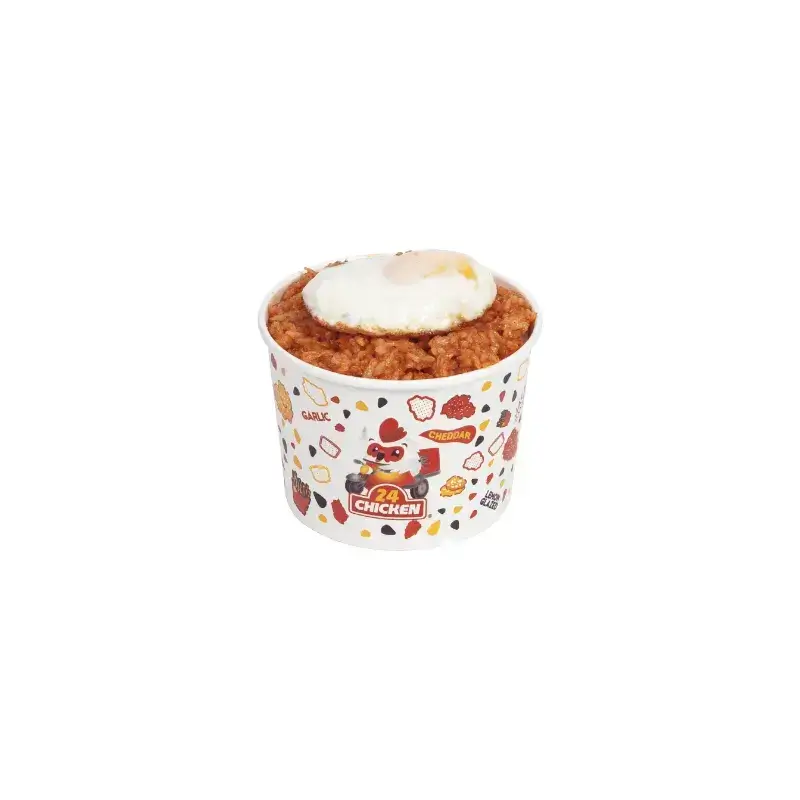
Kimchi Rice isn’t plain rice with kimchi spooned on top at the last minute. The rice is cooked directly with the kimchi, along with sesame oil and gochugaru, so every grain picks up some of that fermented tang and chili warmth as it cooks rather than sitting apart from it on the plate. That difference in preparation is what gives it a noticeably deeper, spicier flavor compared to just combining the two separately at the table.
Estimated Nutrition Information
| Nutrient | Estimated Value |
|---|---|
| Calories | ~230 kcal |
| Total Fat | 3 to 5 g |
| Carbohydrates | 42 to 46 g |
| Protein | 4 to 6 g |
| Sodium | 160 to 220 mg |
Ingredients
- Rice
- Kimchi
- Sesame oil
- Gochugaru (Korean chili flakes)
Allergens Information
Contains: Soy, Sesame May Contain: Fish (from fish sauce or salted seafood sometimes used in kimchi seasoning), Sulphites
Why Choose Kimchi Rice?
It’s a good middle-ground option for anyone who finds plain rice a little boring but isn’t ready to order kimchi as its own separate side. It brings its own personality to the plate without needing anything else added to it. Kimchi Rice can also be enjoyed with a complete 2-piece chicken meal, making it a practical option when you want chicken, rice, and a drink together.
Best Pairing
Save this one for the milder flavors, Original, Garlic, or Snow Cheese, since the tang actually gets to come through clearly when it isn’t fighting a heavy sauce glaze for attention.
Caramelized Onions
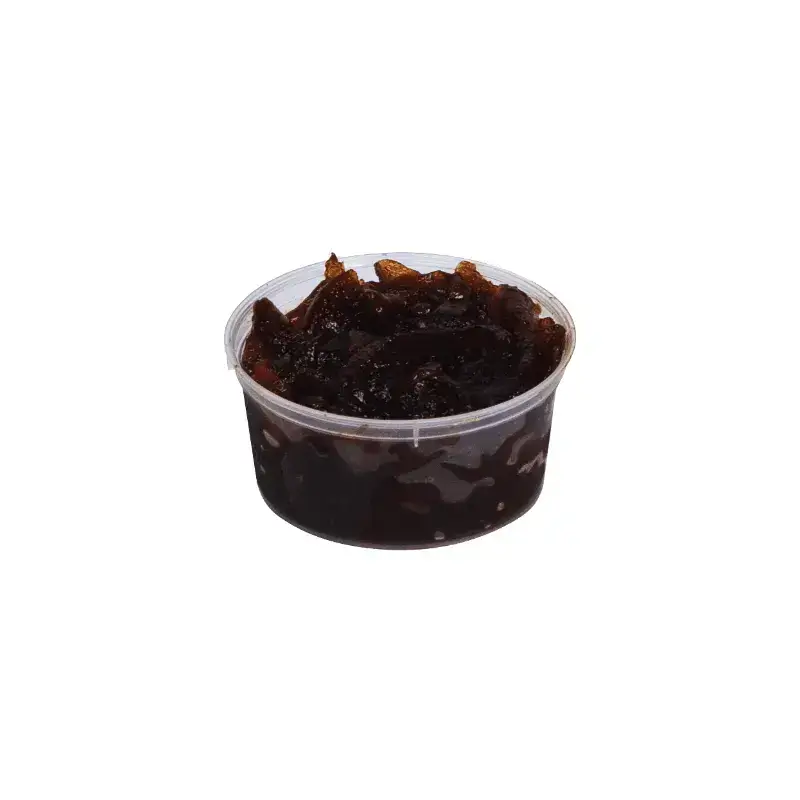
Caramelized Onions start out as nothing more than sliced onions, but slow cooking over low heat breaks down the natural sugars until the texture turns soft and the taste turns sweet instead of sharp. It’s the one side on this menu that isn’t trying to add spice, tang, or acidity. It’s doing the opposite, softening things out and mellowing whatever richer flavor sits next to it.
Estimated Nutrition Information
| Nutrient | Estimated Value |
|---|---|
| Calories | 60 to 90 kcal |
| Total Fat | 2 to 4 g |
| Carbohydrates | 8 to 12 g |
| Protein | 1 to 2 g |
| Sodium | 60 to 100 mg |
Ingredients
- Onions
- Butter or cooking oil
- Sugar (for caramelizing)
Allergens Information
May Contain: Milk (if prepared with butter) Not typically present: Cereals/Gluten, Egg, Soy, Sesame, Fish, Mustard, Sulphites
Why Choose Caramelized Onions?
Anyone who finds a smoky barbecue flavor a bit one-note on its own should try adding a spoonful of these alongside it. They round out the char and smokiness without adding more heat or acid on top of it.
Best Pairing
They work especially well with the smokier flavors, Jack Daniels and Spicy BBQ in particular, where the sweetness balances the savoriness instead of just piling more intensity onto an already bold glaze.
Kimchi
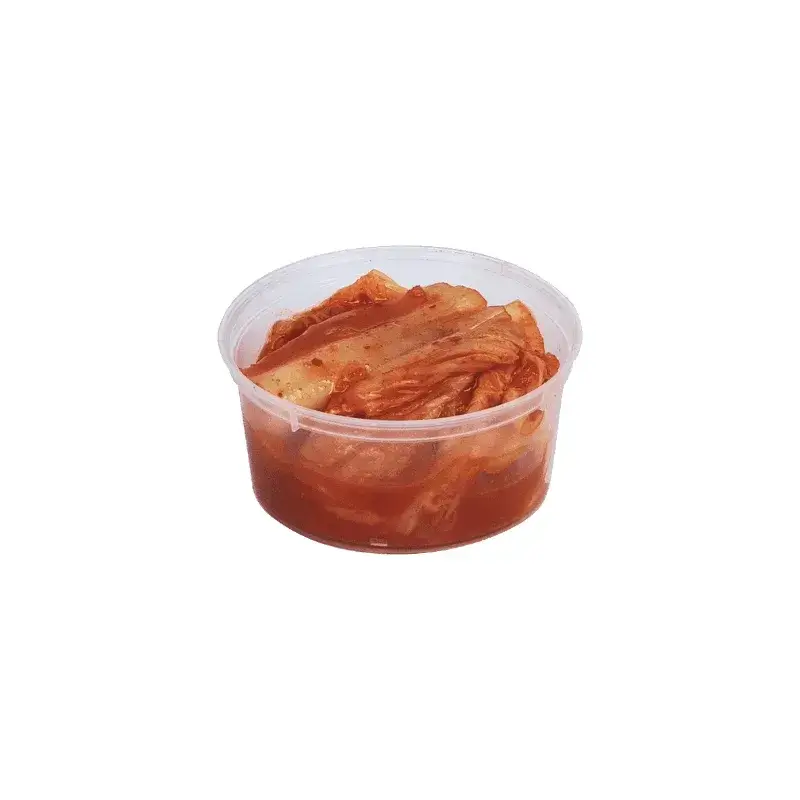
Kimchi is sold here as its own standalone side, separate from whatever gets mixed into the rice, for anyone who wants more of it on the plate. It’s made from fermented napa cabbage, gochugaru, and garlic, with fish sauce or salted seafood often worked into the seasoning depending on the recipe. That fermentation is what gives it its distinct sour, spicy, faintly funky flavor, the kind of taste that isn’t for everyone on the first bite but works exceptionally well next to something rich and heavy.
Estimated Nutrition Information
| Nutrient | Estimated Value |
|---|---|
| Calories | 15 to 25 kcal |
| Total Fat | 0 to 1 g |
| Carbohydrates | 3 to 5 g |
| Protein | 1 to 2 g |
| Sodium | 200 to 280 mg |
Ingredients
- Napa cabbage
- Korean chili flakes (gochugaru)
- Garlic
- Fish sauce or salted seafood (varies by recipe)
Allergens Information
Contains: Soy May Contain: Fish (from fish sauce or salted seafood), Sesame, Sulphites
Why Choose Kimchi?
At roughly 15 to 25 calories a serving, this is about as close to a free side as the menu gets, and it does more work than that low calorie count suggests. A few bites in between pieces of rich, cheese-dusted chicken help reset the palate so the next bite tastes just as good as the first one.
Best Pairing
It’s built for the richer, cheese-forward flavors, 24 Cheddar and Snow Cheese especially, where its acidity cuts straight through the dairy and fat instead of getting lost underneath it.
24 Chicken Side Dishes Comparison
| Side Dish | Price | Best For | Calories |
|---|---|---|---|
| Rice | ₱25 | Neutral base for bold flavors | ~200 kcal |
| Kimchi Rice | ₱75 | Tangy pairing with mild flavors | ~230 kcal |
| Caramelized Onions | ₱50 | Sweet contrast for smoky flavors | 60–90 kcal |
| Kimchi | ₱55 | Lowest-calorie, palate cleanser | 15–25 kcal |
How to Choose a Side With Your Chicken
There’s a simple pattern running through all four of these options once you notice it: the bolder the chicken flavor, the plainer the side should be, and the milder the chicken, the more room there is for the side to bring its own personality.
- For bold, sauce-heavy flavors: stick with plain Rice so the glaze stays the star of the plate.
- For milder flavors: Kimchi Rice or Kimchi adds flavor without competing, since there’s nothing loud already on the chicken to fight against.
- For smoky flavors: Caramelized Onions soften the char instead of adding more of it.
- For rich, cheese-based flavors: Kimchi cuts through the dairy and resets the palate between bites.
- For the lowest-calorie option: Kimchi wins by a wide margin over the other three.
Conclusion
The 24 Chicken Side Dishes menu is useful when you want to balance flavor, portion size, and calories in your order. Plain Rice works best with rich or sauce-heavy chicken, while Kimchi Rice adds a savory, tangy kick to milder flavors such as Original, Garlic, or Snow Cheese. Caramelized Onions add sweetness to spicy or smoky chicken, while Kimchi is a lighter choice with acidity that cuts through creamy or sweet sauces. Choosing the right side can make a small chicken order more satisfying without adding another full meal. Since prices and availability can vary by branch, check the latest 24 Chicken Menu before ordering for current sides, chicken flavors, rice meals, drinks, and other options.